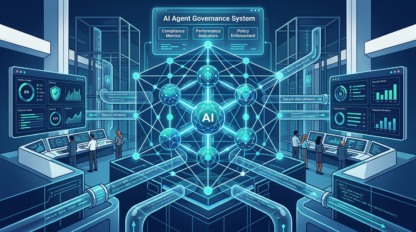
Part 1: Agent 365 is GA — What It Is, What It Does, and Where It Stops
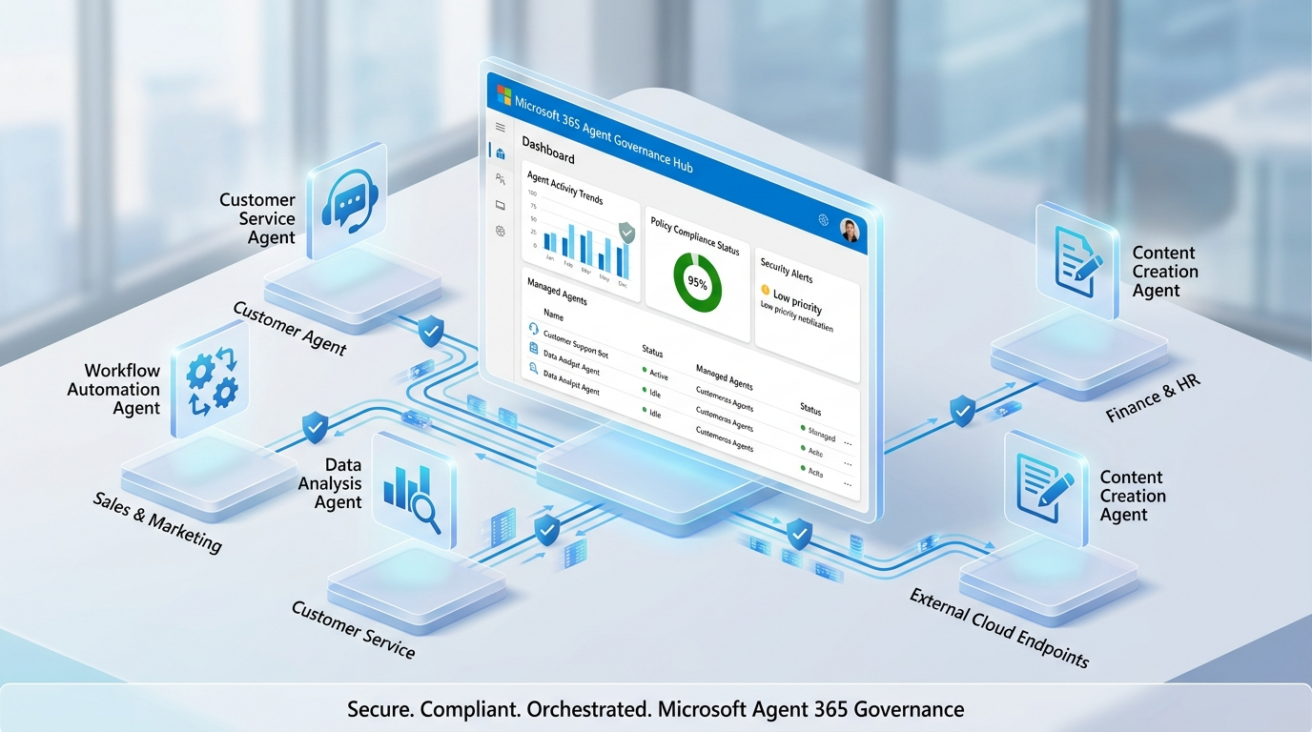
Agent 365 hit General Availability on May 1, 2026, marking an important shift in how enterprises must think about AI. Over the last two years, the race has been about “Who” could build copilots and agents the fastest. In 2026, that race changes. The differentiator is no longer just building agents—it is running an agent estate safely, at scale.
As agents multiply and sprawl across business units, endpoints, clouds, and partner platforms, organizations are encountering a familiar problem: rapid capability growth without consistent ownership, visibility, or control. This is the exact gap Agent 365 is designed to address.
Why Microsoft Built Agent 365
Agent 365 is Microsoft’s response to agent sprawl—not by introducing another agent‑building tool, but by extending enterprise governance to a new category of digital actors.
Microsoft’s framing is intentional. The core challenge is not how to create agents, but rather how to observe, govern, and secure them across an increasingly fragmented ecosystem. Agent 365 lives directly inside the Microsoft 365 admin center, integrating with the same control planes enterprises already rely on:
- Entra for identity and access
- Defender for security monitoring
- Purview for compliance and data protection
- Intune for endpoint controls
Rather than creating a new governance silo, Agent 365 extends its existing operational patterns to the agent estate.
What Agent 365 Actually Delivers at GA
Agent 365’s GA value is best understood in practical, operational terms.
1. A Centralized Agent Inventory
Agent 365 provides a registry/system of record for agents, enabling organizations to answer foundational governance questions:
- What agents exist?
- Who owns them?
- Where do they run?
- What is their lifecycle state?
In environments where agents are created by business users, developers, and third‑party vendors, this visibility becomes the prerequisite for any meaningful control.
2. Agents as Managed Identities
Governed agents can be represented in Microsoft Entra with an Agent ID, allowing them to participate in identity and access workflows alongside users and applications.
This is a critical shift. Instead of unmanaged keys, embedded credentials, or opaque vendor permissions, agents can be governed using policy‑based access decisions, ownership models, and lifecycle controls enterprises already understand.
3. Extending Security and Compliance to Agent Activity
Agent 365 integrates agent behavior into established security and compliance workflows. This allows organizations to evolve from “user + device” monitoring to “user + device + agent.”
In practice, this means agent activity can be:
- Investigated using existing SOC processes
- Audited within compliance tooling
- Governed through enforceable policy
Agents stop being special‑case automation and start being first‑class operational entities.
4. Early but Meaningful Progress on Shadow AI
Agent 365 GA coincides with Microsoft expanding visibility into local agents running on endpoints—historically one of the hardest categories to detect. Using Defender and Intune capabilities, Microsoft is beginning to surface and apply controls to certain unmanaged agents, with broader coverage expected over time.
This is not universal discovery, but it is a material step toward addressing shadow AI where sensitive data exposure often begins.
5. A Broader Governance Perimeter
Agent 365 is designed for heterogeneous environments. Documentation and partner announcements describe the visibility of third‑party agents, including those built on platforms such as Google Vertex AI and Amazon Bedrock, through registration and integration mechanisms.
The message is clear: governance boundaries should follow risk and data, not only platform lines.
Where Agent 365 Deliberately Stops !!!
Agent 365 is powerful, but it’s not a silver bullet.
- It governs visibility, access, and policy, not business correctness.
- It helps reduce shadow AI but does not instantly eliminate it.
- GA capabilities are production‑ready. Frontier features are not and do not carry SLAs.
- Tooling does not replace accountability, testing, or ownership and operations models
These limitations are not failures—they are necessary guardrails for responsible scale.
Why This Matters for AI Maturity
Agent 365 signals a maturity shift: agents are no longer experimental automations. They are managed digital actors that require identity, governance, and lifecycle discipline.
Understanding what Agent 365 does—and just as importantly, what it does not—is step one. Step two is learning how to operate it effectively at scale, before sprawl forces reactive governance.
That is where most organizations struggle—and where Part 2 begins. Stay tuned next week for insights on operating Agent 365 at scale to turn governance into a managed capability.